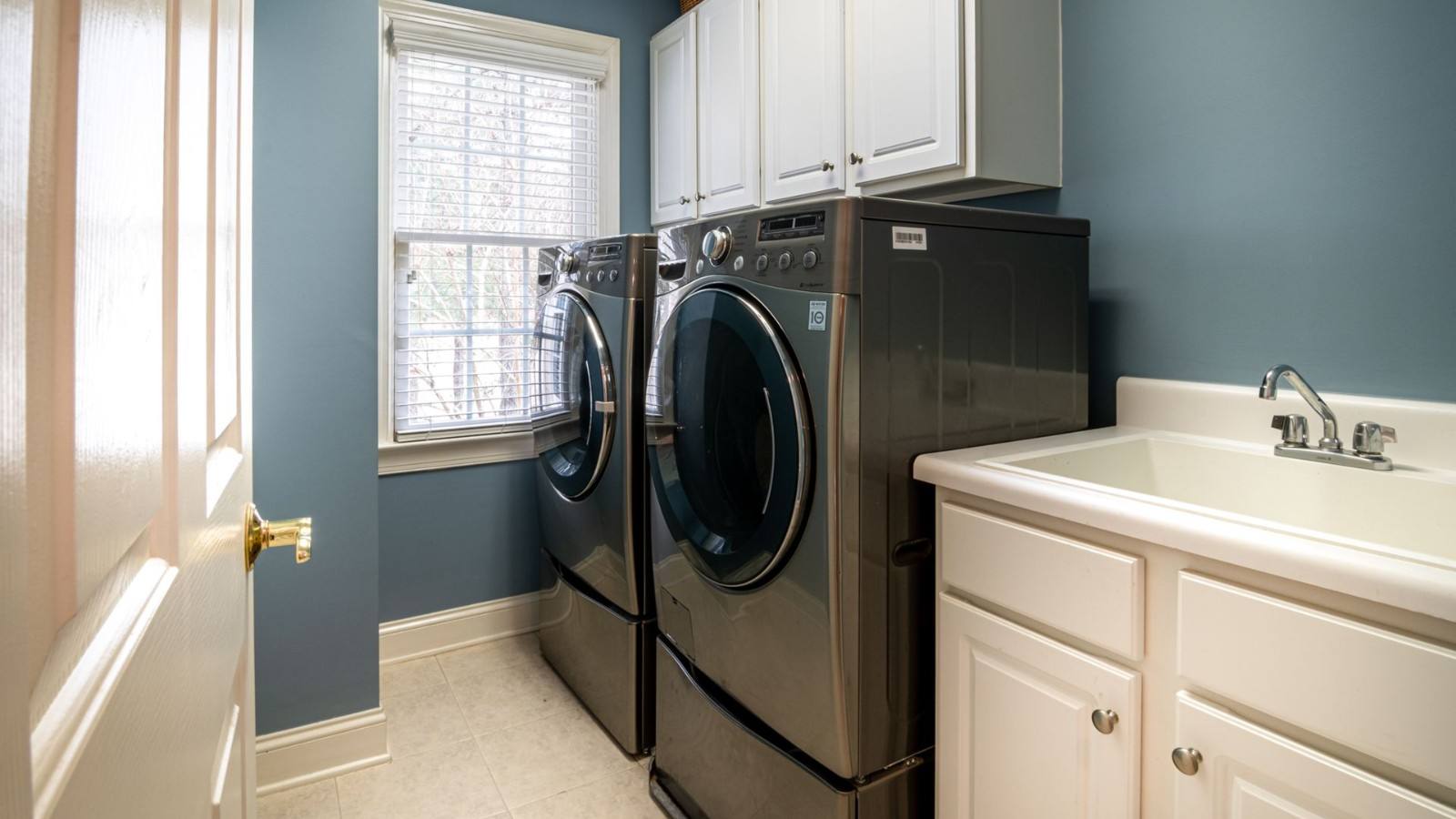
Washing machine lifespan by source
| Source | Lifespan | What it’s based on | Basis |
|---|---|---|---|
| Consumer Reports | Close to 10 years on average | CR’s repair-or-replace analysis, drawing on its member surveys | industry study (Consumer Reports) |
| NAHB / Bank of America study (2007) | 10 years | 2006 telephone survey of manufacturers, trade associations and researchers | industry study (NAHB) |
| InterNACHI life expectancy chart | 5 to 15 years | Home inspectors’ chart, assuming regular recommended maintenance and normal wear | industry study (InterNACHI) |
| US Department of Energy (2024 rule) | 13.4 years average | Lifetime estimate used in DOE’s life-cycle cost analysis for residential clothes washers | official (US DOE) |
| Range used by the checker above | 5 low / 10 typical / 15 high | Low and high are InterNACHI’s range ends; typical is the median of the four central figures (10, 10, 10, 13.4) | our estimate |
Three of the four sources land on about 10 years. DOE’s figure is higher because it is a statistical average of how long washers stay in service nationwide, so long-lived machines pull it up. The InterNACHI range is the widest, which is a fair warning: two washers of the same age can be in very different shape.
The 2007 NAHB study also notes that appliances “are often replaced long before they are worn out because changes in styling, technology and consumer preferences make newer products more desirable.”
Top-load vs. front-load
None of the sources above gives a separate lifespan for top-load and front-load washers. They do differ in repair costs, upkeep and running costs.
| Washer type | Median repair cost (CR member survey) |
|---|---|
| Front-load | $158 to $214 |
| Top-load agitator | $123 to $175 |
| Top-load high-efficiency | $142 to $213 |
| Compact | About $186 |
Basis: industry study, Consumer Reports member surveys.
Consumer Reports notes that a service charge of at least $100 to $150 usually comes on top. It also quotes its laundry expert as saying complex jobs like replacing the drum bearings in a front-loader need a professional, because of the machine’s internal structure.
Front-loaders need a little more care. Whirlpool’s maintenance advice for front-load washers is to leave the door open after use so the drum can dry, and to wipe the door seal regularly.
What shortens or extends a washer’s life
The NAHB study says the life of home components “is greatly affected by the quality of maintenance.” These steps come from Whirlpool’s washer maintenance guide and the NFPA:
- Clean the washer regularly. Whirlpool recommends cleaning it every 30 days or every 30 wash cycles.
- Use the right detergent. Use high-efficiency (HE) detergent in HE machines, in the amount the maker recommends.
- Don’t overload it. The NFPA’s laundry safety tips say to avoid overloading a washing machine or dryer.
- Check the hoses and keep the washer level. Whirlpool lists both in its routine checks.
No source puts a number of years on what these habits add.
Signs a washer may be near the end
Consumer Reports lists the problems owners run into most: control panel malfunctions, drainage issues, excessive vibration, leaks, a drum that won’t spin, clogged drain pumps, and odor, mold or mildew. Many of these are fixable. The ones that tip the math toward replacing are major repairs on an older machine:
| Repair | Angi (2026) | HomeGuide | Fixr (2025) |
|---|---|---|---|
| Most washer repairs | $180 to $250 | $100 to $400 | $150 to $400 |
| Motor repair or replacement | $250 to $700 | $300 to $700 | $300 to $500 |
| Control board | $200 to $500 | $350 to $550 | $250 to $400 |
| Door seal or gasket | $120 to $500 | $275 to $600 (front-load) | $230 to $300 |
| Pump replacement | $150 to $400 | $150 to $350 | $300 to $400 |
Trade estimates, labor included, as of September 2026. HomeGuide and Fixr are independent of Angi; HomeGuide pages are titled 2026 but were first written in 2023–24, and Fixr pages were updated in 2025. Angi puts new washers at $500 to $1,200. That means a motor or control board repair can reach half the price of a new machine. Consumer Reports’ rule of thumb says that’s the point to stop repairing, and on a washer near or past 10 years the case for replacing is stronger.
The good news is that washers don’t break often early on. In CR’s 2025 member survey, only 13% of washers broke down in their second through fifth years of ownership.
What this means when buying a used washer
- Get the age from the serial number. See our guides for Whirlpool, GE, LG, Maytag and Kenmore.
- Compare age with the typical lifespan. A 7-year-old washer measured against a typical 10-year life has about 3 years left on average. At the high end (15 years) it could be 8. At the low end (5 years) it would already be past its expected life. This is simple subtraction, not a prediction. Averages hide wide variation.
- Match the price to the remaining life. A washer with a few years left should be priced like one. See used washer price.
- Budget for a repair. Most washer repairs run about $150 to $400 across three trade guides (Angi, HomeGuide, Fixr). If the seller mentions a known fault, run the quote through the repair or replace calculator.
- Check for recalls with our recall check or on CPSC.gov.
For what to test in person (fill, drain, spin, leaks, smell), use the used appliance buying checklist.
The energy and water angle
Newer, certified washers use noticeably less water and energy. According to ENERGY STAR:
- ENERGY STAR certified washers use about 20% less energy and about 30% less water than regular washers.
- A full-size certified washer uses 14 gallons of water per load, compared with 20 gallons for a standard machine.
- Certified front-load washers use about 50% less energy and water than a top-load agitator washer, and about 25% less than a top-load impeller washer.
- Over its lifetime, a certified model can save about $530 in energy costs.
An older agitator washer can be cheap to buy but costs more to run. Weigh both when you compare listings.
Limitations
- These lifespans are averages and rules of thumb. They can’t tell you how hard a particular washer was used.
- No source here splits lifespan by brand or by top-load vs. front-load.
- Repair costs are national trade estimates and vary by region and by technician.
What to do next
- Price check: used washer price
- Repair quote in hand: repair or replace calculator
- Buying the matching dryer? See how long dryers last
- Inspect before you pay: used appliance buying checklist
Checked against the sources below on 26 September 2026.