Before adding cleaner, identify the washer
Find the complete model number and open its manufacturer’s care instructions. Our model-number guide helps locate the label. Look for Washer Care, Tub Clean, Basket Clean or the equivalent section; the control-panel wording alone is not the full procedure.
Write down the permitted product, amount, where to add it, cycle and any follow-up rinse. If you cannot find matching instructions, ask the manufacturer before choosing a chemical or a substitute cycle.
This guide is for routine cleaning of a used washer that is already properly installed. It is not an installation or repair procedure, and does not certify sanitation or rule out hidden damage. If you are still deciding whether to buy it, use the pre-purchase inspection checklist first. Check the complete model against the relevant official recall notice before use.
Front-load and top-load: what should you clean?
| Area | Practical next step |
|---|---|
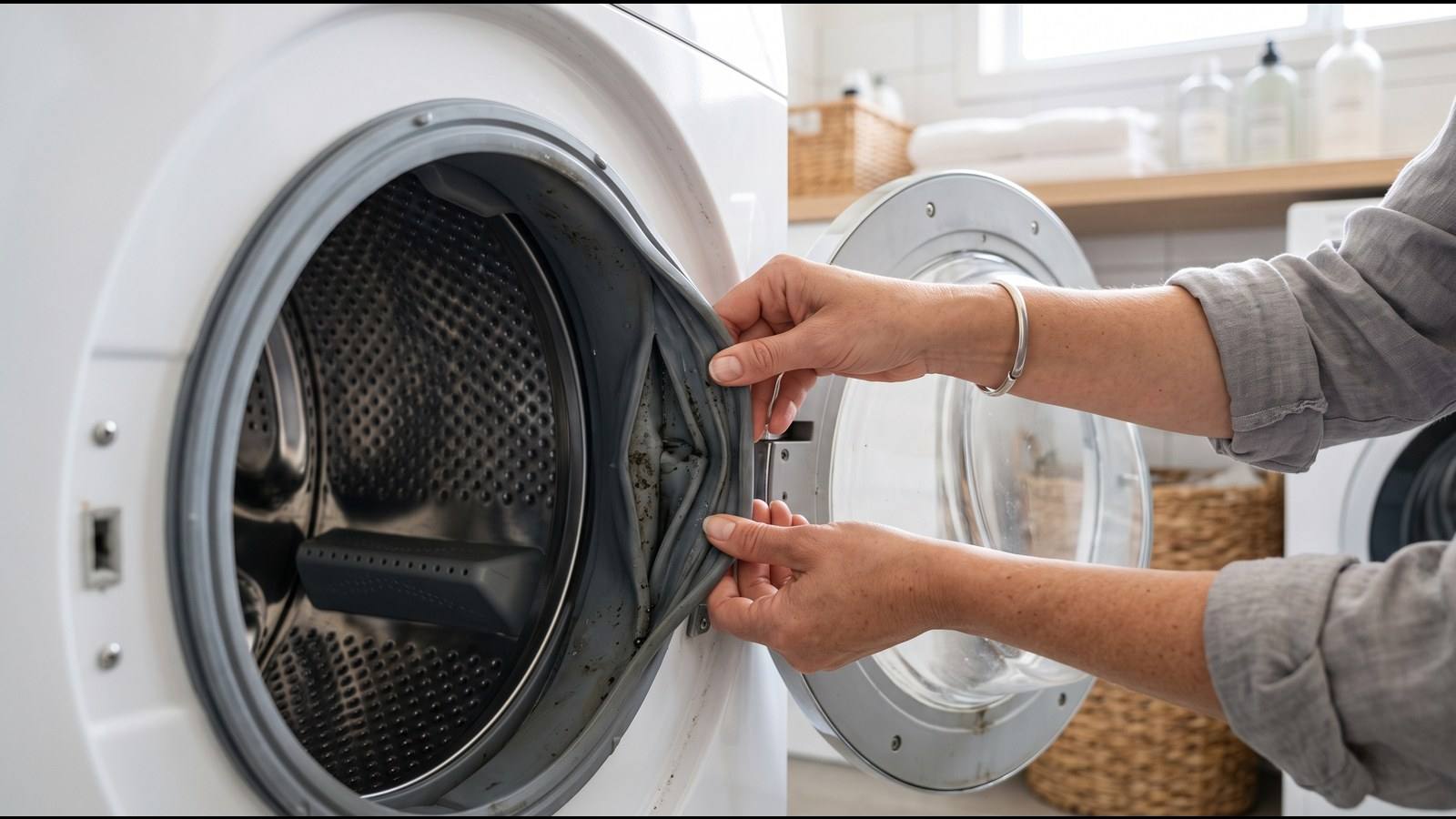
| Front-loader door and rubber seal | Inspect the accessible fold and follow the manual’s wiping instructions. Do not detach the seal. |
| Top-loader basket and lid area | Remove loose objects and use the specified tub-cleaning procedure. |
| Detergent dispenser | Confirm whether it is removable before pulling or dismantling anything. |
| Drain-pump filter | Look for a user-maintenance procedure for your exact model; do not assume every washer has an accessible filter. |
Basis: Whirlpool’s front-load guide, GE’s top-load procedure and Whirlpool’s care guidance below. These are differences to check, not interchangeable instructions.
A practical first-clean sequence
1. Empty the washer and check accessible surfaces
Remove laundry and loose objects. On a front-loader, inspect the door window and accessible gasket fold. Whirlpool describes wiping these areas with a damp cloth or an appropriate cleaning wipe. Follow your manual’s precautions and surface-cleaning instructions.
For dispensers, check before pulling. Whirlpool’s W11684247 Rev B manual distinguishes fixed dispensers and trim from a removable drawer on equipped models. It recommends mild products for exterior surfaces and warns against abrasive products that could damage the finish.
Basis: Whirlpool front-load cleaning and top-load manual, Washer Maintenance.
2. Use the specified product and empty cleaning cycle
Follow the amount and placement in the matching manual and cleaner label. Do not assume a cleaner belongs in the detergent drawer, or that more product will work better.
For example, Whirlpool’s front-load Clean Washer guidance warns against thickened, easy-pour or no-splash bleach because it may create excess suds during that cycle. Product type matters as well as amount; a bottle marked bleach is not automatically suitable.
Select the model’s cleaning procedure rather than substituting the hottest laundry cycle. Let it finish and follow any required rinse instructions before washing clothes. GE’s cited Basket Clean guidance specifically says to complete the cleaning cycle before use if it was interrupted.
Basis: Whirlpool front-load interior cleaning and GE Basket Clean guidance.
3. Check the result before your first load
Inspect the accessible areas again after the procedure finishes. Follow the manual’s drying guidance. If odor remains after thorough cleaning, Whirlpool recommends maintenance service to investigate.
If the machine leaks, fails to drain or shows an unresolved error, pause first use and arrange an appropriate service assessment. These are operating problems, not a reason to add more cleaner. Whirlpool’s cited top-load manual treats leaks and drainage faults separately in its troubleshooting section.
For any drain-pump filter, use only your model’s documented user-maintenance instructions. If the manual does not provide a user procedure, ask the manufacturer or a technician rather than opening a cabinet or removing a panel.
Basis: Whirlpool odor/service guidance and the troubleshooting section of its top-load manual.
Bleach, vinegar and cleaning tablets are not interchangeable
There is no universal homemade recipe for this job. GE’s cited top-load Basket Clean page lists vinegar as an option; Whirlpool cautions that vinegar’s acidity can damage rubber seals and hoses over time. That difference is a reason to use the exact washer’s instructions, not to combine advice from different brands.
Never mix bleach with vinegar or other cleaners. CDC advises against mixing bleach or disinfectants with other cleaning products and recommends good ventilation when bleach is used indoors. Follow the product label’s protective-equipment instructions too. A general household disinfecting recipe is not a washer-care specification.
Basis: GE top-load guidance, Whirlpool on vinegar and CDC bleach guidance.
Keep a short first-use record
Our editorial checklist helps you keep the procedure tied to this washer:
- Complete model number and matching manual found.
- Specified cleaner, amount and cycle recorded.
- Accessible surfaces cleaned without forcing parts off.
- Empty cleaning cycle and required follow-up steps completed.
- Persistent odor or operating faults resolved before laundry.
Save the manual for the next clean and follow its maintenance interval. For the broader ownership decision, our washer lifespan guide explains how age, condition and repair needs fit together. Cleaning is one maintenance task; it does not reset a used machine’s age.
Checked against the sources below on 11 October 2026.